
Jaipur, Udaipur and Jodhpur, one of India’s most-visited cultural corridors, says report
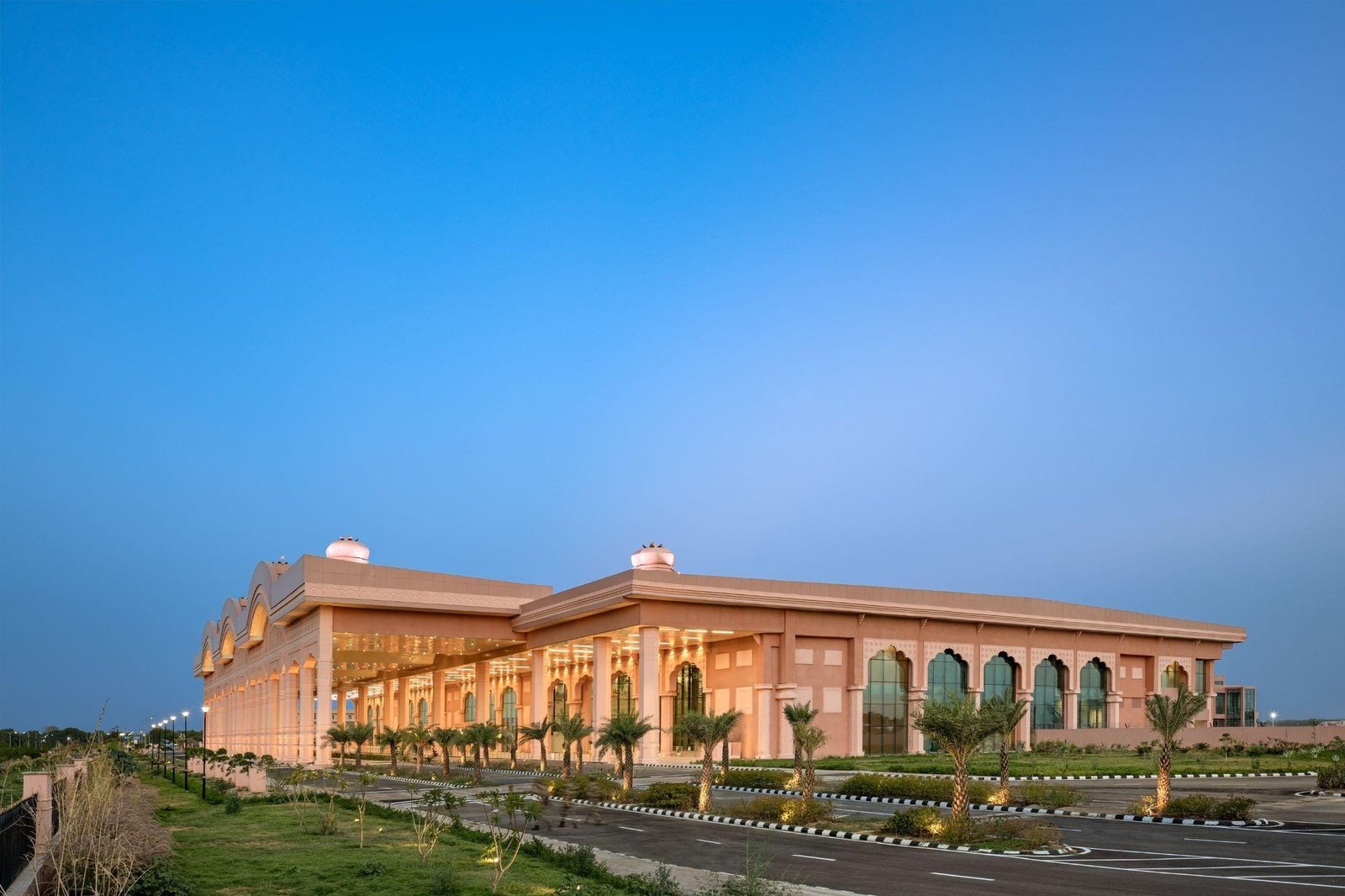
A new terminal at Jodhpur Airport, equipped to handle over two million passengers annually, was inaugurated by Prime Minister Modi on 4 July. It was commissioned by the Airports Authority of India (AAI) and designed by STHAPATI, a multidisciplinary architectural practice headquartered in New Delhi and Lucknow.
A New Chapter for the Blue City in India’s Tourism Corridor
Located on the city’s outskirts, the terminal strengthens Jodhpur’s position within Rajasthan’s heritage triad of Jaipur, Udaipur, and Jodhpur, one of India’s most-visited cultural corridors. Jodhpur continues to attract global travellers for its indigo-hued old town, the iconic Mehrangarh Fort and luxury wedding destinations. The new infrastructure addresses rising passenger demand, enabling ease of domestic connectivity while positioning Jodhpur to emerge as an international destination of choice in the coming years.
A Terminal Rooted in Legacy, Designed for the Future
The Terminal draws inspiration from Jodhpur’s royal past, set in a city where Maharaja Umaid Singh established the Jodhpur Flying Club in 1931, making Jodhpur an important part of India’s earliest aviation history. The new terminal extends this legacy by combining regional regal architectural identity with modern infrastructure. The facade revives prominent elements of Rajputana architecture, including the fluted dome topped with a kalasa on a lotus base, columns, and multifoil arches, which also appear on the airside facade. Inside the terminal, artworks inspired by paintings of Marwar, Rajput-style peacock murals and jharokha motifs celebrate Jodhpur’s artistic heritage, meticulously designed and crafted by ‘Prastuti ’ – Mahendra Kodwani.
The spatial layout enables intuitive wayfinding with island-style check-in counters, linear security checks, and segregated service circulation. Baggage handling systems have been optimised to minimise processing times. Service and staff movement are routed independently to support operational efficiency without intersecting with public zones.
The Terminal is designed to aim for Green Rating for Industrial Habitat Assessment certification. Sustainability is most effective when embedded in a building’s planning rather than introduced through isolated technologies. Passive design, climate responsiveness, and resource efficiency formed the basis of our approach. Aligning with this approach, the terminal integrates sustainability through deep overhangs to reduce heat gain, Glass Fibre Reinforced Concrete (GFRC), Energy-efficient glazing, and solar panel installations, contributing to long-term environmental performance. Energy simulations indicate that the terminal consumes over 50% less energy than the benchmark for comparable airport buildings.
Jodhpur Airport serves as a strategic catalyst for tourism-led development, expansion of the hospitality sector, and job creation in Western Rajasthan. The enhanced connectivity is expected to contribute significantly to local employment and boost Rajasthan’s position in India’s national aviation growth story. Passenger traffic has steadily increased over the past few years, and the terminal is expected to drive further growth through domestic and potential international routes. Fiinews.com