

Pilot Plant established for Nd-Fe-B manufacturing
Ministry of Heavy Industries invites bids through Global Tender for selection of beneficiaries to set up integrated Sintered Rare Earth Permanent Magnet manufacturing facilities of 6,000 MTPA capacity under the Scheme to Promote Manufacturing of Sintered Rare Earth Permanent Magnet
The Ministry of Heavy Industries has on 20 Mar released the Request for Proposal (RFP) for selection of beneficiaries to set up integrated Sintered NdFeB Rare Earth Permanent Magnet (REPM) manufacturing facilities of 6,000 Metric Tonnes Per Annum (MTPA) capacity under the Scheme to Promote Manufacturing of Sintered Rare Earth Permanent Magnet.
With this bidding process, prospective applicants can submit their bids to establish integrated sintered NdFeB REPM manufacturing facilities in India and can be eligible for availing capital subsidy as well as sales-linked incentives under the Scheme. The bidding will be conducted online through a transparent Least Cost System (LCS) comprising two-stages (Technical Bid and Financial Bid) through Central Public Procurement (CPP) Portal.
The tender documents are available from 20th March, 2026. Pre-bid conference shall be held on 7th April, 2026.
The bid due date is 28th May, 2026 and the technical bids shall be opened on 29th May, 2026.
On 26 Nov 2025, the Cabinet had approved the Scheme to Promote Manufacturing of Sintered Rare Earth Permanent Magnet with a financial outlay of Rs.7,280 crore. The Scheme is first-of-its-kind initiative aims to establish a total capacity of 6,000 Metric Tons per Annum (MTPA) of integrated Rare Earth Permanent Magnet manufacturing facilities in India, thereby enhancing self-reliance and positioning India as a key player in the global REPM market.
Under the Scheme, each beneficiary will be allocated a capacity ranging between 600 MTPA and 1,200 MTPA (in multiples of 100 MTPA). The Scheme provides a capital subsidy of Rs.750 crore and, sales-linked incentive of ₹6,450 crore, with limited assured supply of NdPr oxide from IREL (India) Ltd. for the three lowest bidders.
Rare Earth Permanent Magnets are among the most powerful magnets in the world and are widely used in electric vehicles, wind turbines, high-end electronics, aerospace and defence systems. By building complete value chain from NdPr oxide to finished magnets in India, the Scheme is expected to significantly reduce import dependence in this sector.
Meanwhile, a Pilot Plant for the manufacture of Nd-Fe-B (Neodymium-Iron-Boron) rare earth permanent magnets has been established at the International Advanced Research Centre for Powder Metallurgy and New Materials (ARCI), Hyderabad, an autonomous institution of the Department of Science and Technology (DST).
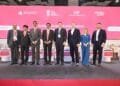
The pilot-plant was inaugurated by Prof. Abhay Karandikar, Secretary, DST, with Dr. R. Vijay, Director, ARCI in the august presence of Prof. Ashutosh Sharma, Former Secretary DST and Chairman, Governing Council, ARCI; Dr. S. K. Jha, Former CMD, MIDHANI, Member-Technical Review Committee; Dr. Shivkumar Kalyanaraman, CEO, Anusandhan National Research Foundation (ANRF), several delegates with major participation from industries, national institutes and other stakeholders.
The facility established at ARCI adopts an end-to-end approach, covering the process from strip-cast alloy to finished sintered magnets, enabling the development of a robust and self-reliant manufacturing ecosystem.
The pilot plant marks a significant step towards achieving self-reliance in critical materials and strengthening India’s position in the global rare earth value chain. Nd-Fe-B magnets are essential components in electric vehicles, renewable energy systems, electronics, and advanced manufacturing technologies.
While inaugurating the pilot plant Prof. Karandikar highlighted this pilot plant is an important step towards building strategic autonomy in critical materials, particularly in the context of global supply chain vulnerabilities and India’s growing demand in clean energy and advanced manufacturing sectors.
“As we work towards Viksit Bharat 2047, addressing resource constraints and strengthening indigenous capabilities in critical technologies will be central to our development strategy. Initiatives like this help reduce dependence while enhancing resilience and competitiveness,” he added.
Prof. Karandikar said on 20 Mar, “We are building an enabling ecosystem—through institutional frameworks and mission-driven programs—to translate research into scalable innovation and we invite industry, startups and academia to partner in positioning India as a global leader in emerging technologies.”
Rare earth magnet supply chains are currently highly concentrated globally, creating vulnerabilities for emerging economies. The establishment of indigenous capabilities across the value chain—from materials to magnet manufacturing—will enhance supply security, cost competitiveness, and technological leadership.
The pilot-scale plant will serve as a critical platform for technology validation and process optimization, industry collaboration and demonstration, scaling up indigenous innovations to commercial manufacturing and supporting deep-tech startups and private sector participation.
“The transition from research to manufacturing is what makes this pilot plant truly significant. Its flexibility will enable continuous innovation, process optimization, and product development,” Prof. Sharma noted.
Dr. Shivakumar Kalyanaraman, CEO, ANRF explained about Mission for Advancement in High-impact Areas (MAHA) initiatives for accelerating critical technologies including India’s EV ecosystem and invited private sectors for active participation in translational research.
Dr. R. Vijay, Director, ARCI informed that ARCI is developing a complete ‘mineral-to-market’ ecosystem—from rare earth extraction to magnet manufacturing—strengthening research translation and and industry linkage.
The pilot plant is expected to catalyse industry participation, foster innovation, and support commercialization of indigenous rare earth magnet technologies. It will also contribute to the growth of the electric mobility ecosystem and advanced materials manufacturing in India.
This initiative represents a key step towards achieving Atmanirbhar Bharat and realizing the vision of Viksit Bharat 2047. Fiinews.com