
Environment infrastructure is entering delivery-led phase
India’s water and waste-management priorities require faster translation of policy into projects that deliver lasting results and help sustainability, says Rajiv Ranjan Mishra, IAS (Retd.), Former Director General, NMCG; Advisor, NIUA; and Chairman, IFAT India Advisory Committee.
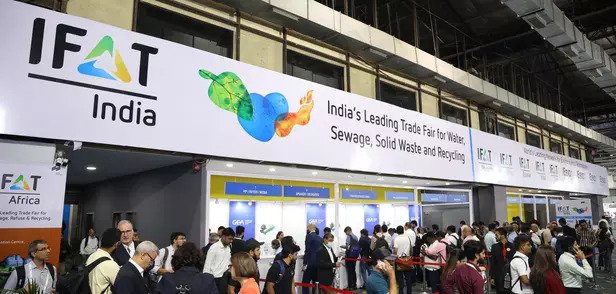
He shared market calls as IFAT India 2026 concluded in Mumbai after bringing together 20,118 business visitors and more than 500 exhibitors from over 30 countries to address India’s evolving water, wastewater, waste-management and recycling requirements.
“IFAT India brings government, industry and technology providers together to address the practical challenges surrounding implementation, financing and operations. This collective effort will be critical to building water secure and resilient cities and advancing the vision of Viksit Bharat 2047,” he said, reflecting on the way forward.
India’s environmental infrastructure agenda is entering a delivery-led phase, and technology choices must perform under local operating conditions, align with procurement frameworks and deliver measurable outcomes, says Bhupinder Singh, President – IMEA, Messe München, and CEO, Messe Muenchen India.
“IFAT India 2026 allowed decision-makers to assess solutions against real project requirements and engage directly with potential partners. Bringing these conversations closer to investment and implementation is where the platform creates lasting value,” he said on 14 Sept in Messe Muenchen India release.
IFAT India, held 9–11 Sept, had 235+ pre-scheduled Buyer–Seller meetings focused on project requirements and technology partnerships. These meetings provided a business and knowledge platform for government agencies, urban local bodies, utilities, industrial users, project developers and technology providers to evaluate solutions, discuss project requirements and build implementation-focused partnerships.
Katharina Schlegel, Exhibition Director and Global Industry Lead, IFAT worldwide, Messe München, elaborated, “IFAT India 2026 demonstrated the country’s growing significance to the global environmental technology industry. The participation of policymakers, utilities, industrial users and technology providers enabled a meaningful exchange between international experience and local requirements.
“As part of the worldwide IFAT network, the Mumbai edition is building partnerships that can help proven solutions achieve scale in India,” said Schlegel.
The international presence included six country pavilions representing China, Germany, Italy, South Korea, Norway and the Netherlands. Dedicated SWAN, IWA, ULB, SME and Start-up Pavilions brought together established technology providers, emerging enterprises, municipal authorities, investors, researchers and professional institutions.
Solutions presented across the exhibition addressed water and wastewater treatment, treated-water reuse, digital monitoring, membrane systems, Zero Liquid Discharge, waste collection and sorting, material recovery, recycling, biogas, refuse-derived fuel, waste-to-fuel applications and energy recovery.
Among the new products showcased were Fornax’s R-MAX3300 for high-capacity Alternative Fuel and Raw Material pre-processing; NX Filtration’s compact, scalable Integrated Rack for ultrafiltration systems; Micro Transmission Systems’ Back Rake Screen for removing solid waste from large channels and drains; Fivebro Water Services’ SUMO-TESK range of multistage centrifugal pumps for high-pressure water-treatment applications and Thermax’s Miracle for treating high-TDS water while increasing water recovery and reducing energy use and operating costs.
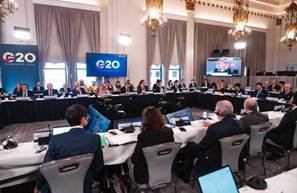
The inaugural ceremony brought together representatives from the All India Institute of Local Self-Government, ASSOCHAM National Water Council, Builders’ Association of India, German Water Partnership, German Recycling Technologies and Waste Management Partnership, GIZ India, International Solid Waste Association, International Water Association, Indian Water Works Association, Material Recycling Association of India, National Solid Waste Association of India, SWAN India Alliance, TERI Centre of Excellence on Water Reuse, KPMG in India and IFAT Worldwide. Their participation reflected the cross-sector coordination required to translate India’s environmental infrastructure priorities into viable projects.
With KPMG as Knowledge Partner, discussions across the Blue, Orange and Green Stages examined water security, sanitation, waste management, resource recovery, circularity, infrastructure finance and climate-resilient urban development within the broader framework of Viksit Bharat 2047.
At Speakers’ Corner, specialists presented practical perspectives on water reuse, Zero Liquid Discharge, digital water management and advanced treatment technologies. The International Solid Waste Association’s Young Professionals Group also introduced a proposed University Challenge aimed at bringing research-led ideas and emerging talent into the environmental sector.
The All-India Institute of Local Self-Government, Mumbai, led two forums focused on strengthening urban service delivery. The Chief Engineers’ Forum, supported by AMRUT 2.0, examined project execution, technology adoption and long-term performance across water, wastewater, sanitation and solid-waste infrastructure. Its National Conference, organised with UNICEF India, addressed coordinated planning for improved sanitation and waste-management outcomes across rural and urban India.
Commenting on the forums, Dr Jairaj Phatak, IAS (Retd.), Director General, AIILSG, said, “AIILSG brings 100 years legacy of supporting urban governance and service delivery. Our nine-year journey with IFAT India has grown into a powerful platform for transforming municipal dialogue into actionable governance.
“As the Government Partner for Strategic Connect, AIILSG took pride at IFAT India 2026 in uniting grassroots innovation with high-level policy advocacy. While our specialised conference sessions tackled pressing frameworks around circularity, wastewater, and urban climate resilience, the ULB Pavilion provided a national stage for local bodies to present their indigenously engineered solutions. This seamless integration of technical discourse and ground-level validation is precisely what bridges policy intent with scalable execution.
“We value our enduring collaboration with Messe Muenchen India in steering local bodies in India toward a self-reliant, sustainable urban future.”
Municipal and industrial buyers used the exhibition to compare technologies, examine lifecycle and service requirements, discuss retrofit opportunities and assess how proposed systems could be integrated with existing infrastructure.
The Buyer–Seller Forum supported this commercial engagement through more than 235 pre-scheduled meetings between exhibitors and buyers from India and international markets. These meetings provided a structured setting to discuss project specifications, technology suitability and potential partnerships.
IFAT India will return to Mumbai from 29 September to 1 October 2027, bringing the environmental technology community together to develop solutions and partnerships across India’s water, wastewater, waste-management, recycling and circular-economy sectors. fiinews.com