
RBI’s digital rupee a very bold step that follows global trends, says Pande
The Budget 2022-23, presented in parliament on 1 Feb 2022, seeks to lay the foundation and give a Blueprint to steer the economy over 25 years, calling a period of “Amrit Kaal for making leap bound progress from India @75 to India @100”.
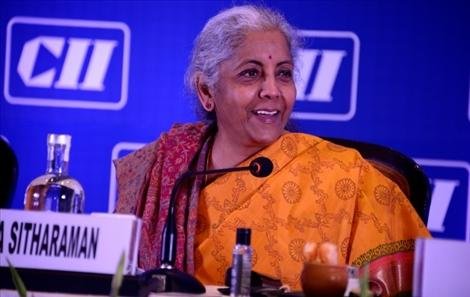
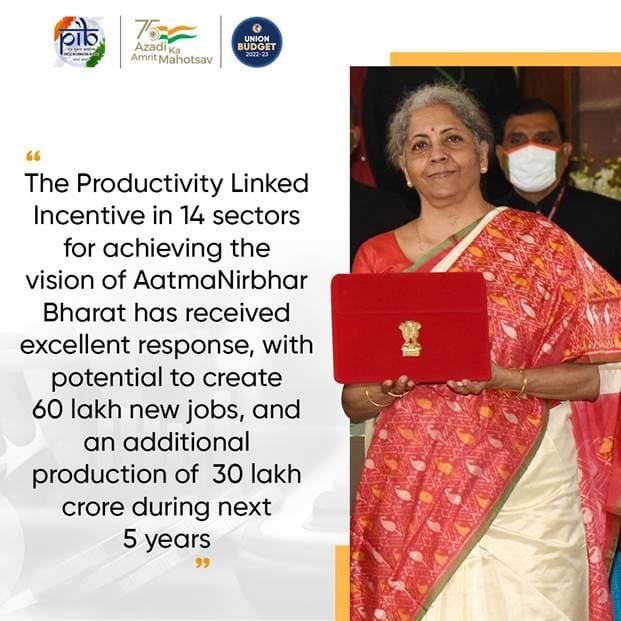
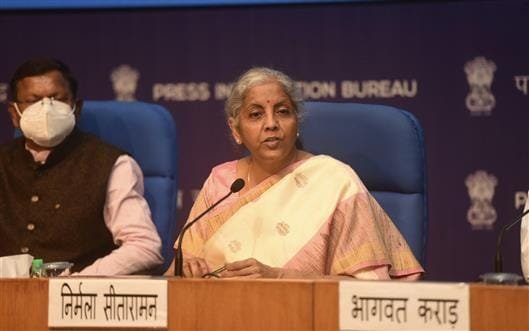
“We are marking Azadi ka Amrit Mahotsav, and have entered into Amrit Kaal, the 25-year-long lead up to India @100” Finance Minister Nirmala Sitharaman said at the presentation of the Budget.
The Minister said that the all-inclusive welfare focus compliments Macro Economic level growth and promotes digital economy, Fintech, technology enabled development, Energy Transition and Climate Action. The focus also relies on virtuous cycle from private investment with Public Capital Investment in order to crowd-in private investment.
“These are the areas in which we achieve our vision by attaining certain goals in coming 25 years.”
The Minister stated that PM GatiShakti, Inclusive Development, productivity enhancement & investment, sunrise opportunities, energy transition and climate action as well as financing of investments are the priorities of this futuristic and holistic budget.
Highlighting the fact that with the estimated growth of 9.2% in the current year and India being the highest among all large economies, the Finance Minister said that this futuristic and inclusive budget continues to provide impetus for growth, which would ensure direct benefit to Youth, Women, Farmers, the Scheduled Castes and the Scheduled Tribes.
PM GatiShakti shall guide big public investments for modern infrastructure to be benefitted by the synergy of Multi-Modal Approach. She further said that the country’s strong resilience is being reflected in the sharp rebound and recovery of the economy.
The Minister expressed confidence and stated that the speed and coverage of the Vaccination Campaign and the accelerated development in health infrastructure in the past two years helped us to withstand challenges.
“We are in a midst of an Omicron wave with high incidence but milder symptoms,” reiterated Sitharaman, asserting that ‘Sabka Prayas’ will help India to continue the journey of strong growth.
The Minister also expressed strong commitment to encourage the poor to tap all opportunities as well as to provide necessary ecosystem to the middle class which is the vast section of population falling under various income brackets.
Commenting on the Budget, Karthik Srinivasan, Senior Vice President & Group Head, ICRA, said, “A growth-oriented budget with 35.4% increase in the capital expenditure aided by Infrastructure investments via innovative funding, sovereign green bonds etc is expected to broaden the overall domestic credit ecosystem.
“The focus on MSMEs via the augmentation and extension of the ECLGS till March 2023 for hospitality and related sector coupled with revamping of the CGTMSE scheme should facilitate additional Rs.2 lakh crore to the sector.
“The continued thrust on housing sector with an allocation of Rs.48,000 crore under the PMAY scheme is to help lenders scale-up exposure towards this segment.
“On expected lines, for the first time in over 10 years, the Government has not allotted any capital to Public Sector Banks for FY2023,” he noted.
Added Anil Gupta, Vice President & Co-Group Head, ICRA, “In line with our expectations, the Government has not budgeted capital for public sector banks for FY2023, further, the Government has also scaled down the budget to Rs.15,000 crore for FY2022 from Rs.20,000 earlier, given the comfortable capital position of public banks.”
The 34.5% increase in infrastructure capital expenditure is a very welcome announcement and will have a multiplier impact on incomes and employment, says Girija Pande, Chairman of the Singapore-based Apex Avalon Consulting Pte Ltd.
He also welcomed the launch of Central Bank Digital Currency (digital rupee) by Reserve Bank of India as a “very bold step that follows global trends”.
However, the 30% tax on digital assets is heavy and may have to be reduced, felt Pande, whose company provides Management Consulting and Business Research to businesses in the fast growing Asia Pacific market.
“Two areas of missed opportunities are lack of major thrust in exports or youth employment. India needs to become a major exporter if it wants to become a major economic power. That’s how East Asia developed,” he said in comments on the Union Budget.
“The budget is a giant step to get our economy on track and propel it to reach a target of US$5 trillion in the next few years,” added Atul Temurnikar, Chairman and Co-founder, of Singapore-based Global Schools Foundation.
“The aim of the budget was to give support and push to agriculture and small businesses, which it has managed to do. In the bargain, it has also given a major thrust to India’s greater initiatives like Digital India, Make in India and Startup India.
“It is also great to see the budget, under the guidance of Prime Minister Narendra Modi, giving due focus to new-age economic thrusters like Electric Vehicles industry and Crypto. The plans for Digital Rupee, for instance, have come at the right time,” said Temurnikar.
The Budget has hit the nail on the head when it comes to education initiatives, he noted.
“It shows that the Narendra Modi government has its finger on the pulse of the nation as it charges into the digital age of education. The focus of digital learning, formation of digital universities and the promise of bringing training and digital infrastructure to the education sector – all this just goes to show that the government has one eye on the future even as it deals with current pandemic-related problems.
“In addition, I am very excited about the announcements on new e-learning content delivery platforms on handheld devices.”
“This is good news for education institutions who can deal with external disruptions with more ease and confidence in future. This is also a reflection of how the Modi government is thinking ahead of the curve as we charge into the 21st century with full force of youth behind us,” said Temurnikar whose Singapore-headquartered foundation has 26 campuses in 9 countries including Japan, South Korea, the UAE, Saudi Arabia and Malaysia. fiinews.com