
Startup bets on iron-air as foundational infrastructure play to support renewable grid
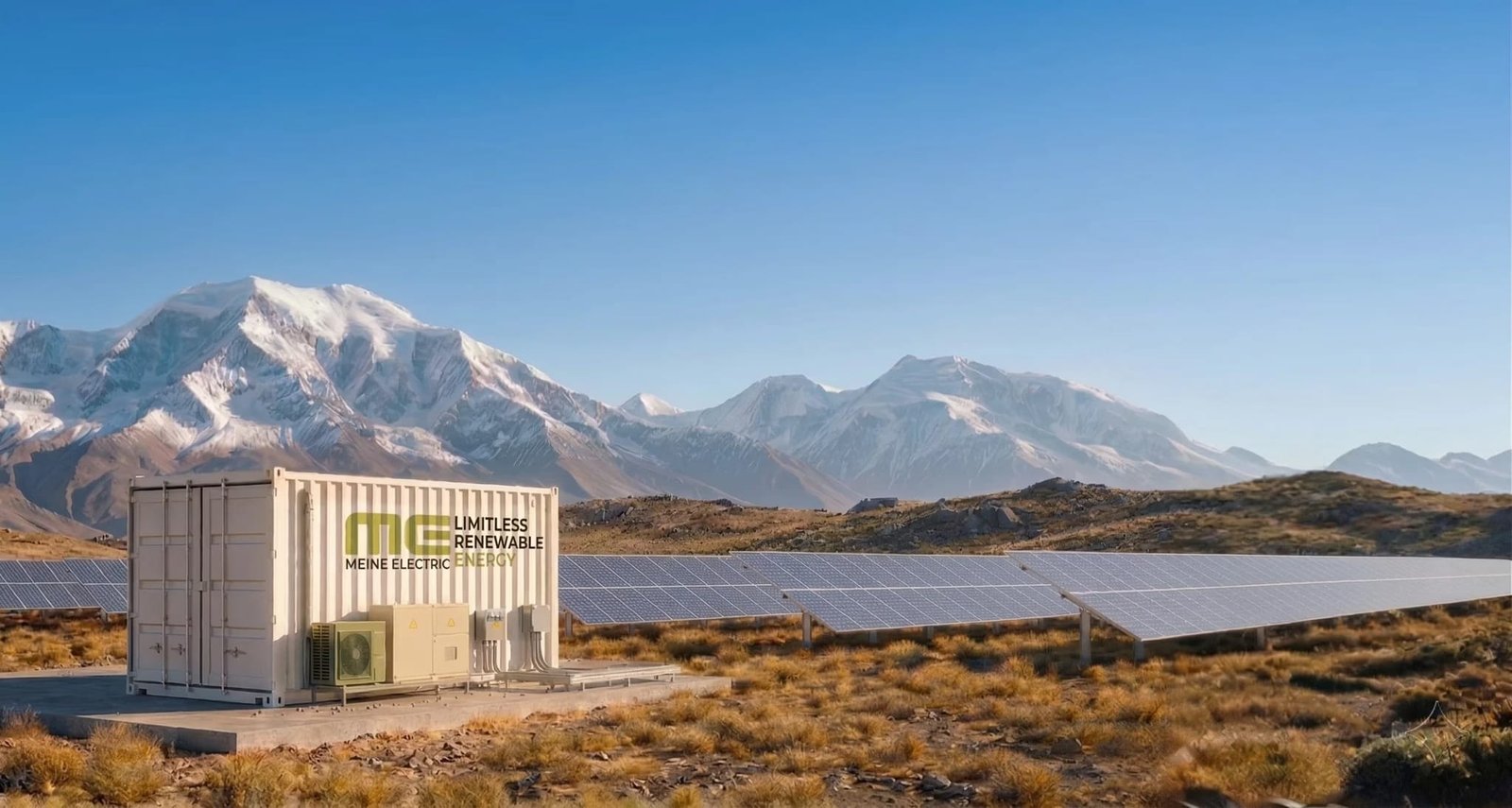
Indian deep-tech startup Meine Electric has developed the world’s first fast-charging iron-air battery system, marking a significant technical advancement for long-duration energy storage (LDES). The technology, which features a proprietary Fast Charge Long Discharge (FCLD) capability allowing the battery to charge in 6 hours and discharge over 18 hours, has been independently validated by Customized Energy Solutions (CES), a US-headquartered global energy services and technology company, and the parent organization of the India Energy Storage Alliance (IESA).
The independent testing was conducted by the CES Battery Laboratory through a structured testing protocol designed to assess electrochemical performance, capacity retention, and operational stability. Testing two iron-air electrochemical cells, the assessment validated the system’s operational stability under an asymmetric duty cycle comprising a rapid 6 hours of charging followed by 18 hours of discharging per cycle.
Historically, iron-air battery chemistry has been limited by longer charge cycles, with existing approaches focused on multi-day storage applications. According to DataM Intelligence’s Iron Air Battery Market Size, Long-Duration Energy Storage Forecast 2035; 2026 Report, Iron-Air batteries are emerging as a promising solution for long-duration energy storage due to their ability to provide reliable and scalable storage using abundant materials such as iron. Global players, including Form Energy (US) and Ore Energy (Europe), have built Iron-Air systems focused on long-duration applications, with existing approaches demonstrating storage durations of up to 100 hours. However, these longer cycle times have restricted its suitability for daily renewable energy balancing.
Meine Electric has addressed this limitation through its proprietary Fast Charge Long Discharge (FCLD) technology, electrode development processes, and new system architecture. The technology enables a 6-hour charge and 18-hour discharge cycle, making it the world’s first fast-charging Iron-Air battery technology designed for daily-cycling renewable energy applications. The chemistry also offers fundamental advantages including inherent safety, reliance on abundant raw materials, and lower system costs compared to lithium-ion.
“Traditional iron-air systems are restricted to multi-day cycles, making them largely incompatible with the intermittent nature of renewable energy generation. Furthermore, solar-heavy grids don’t need a 100-hour battery,” said Priyansh Mohan, Co-founder and CEO of Meine Electric.
“Unlike regions that require seasonal storage, the renewable challenge across Asia and MEA is fundamentally a daily balancing problem. By engineering our system to capture a full charge within a tight 6-to-8-hour window, we are finally turning iron-air batteries from a sluggish backup chemistry into a foundational, daily-cycling asset,” Mohan said on 14 July.
This daily-cycling capability aligns precisely with the requirements of rapidly growing renewable energy markets like India, where the grid demands storage technologies that can consistently capture excess solar generation during the day and discharge it reliably overnight. For Meine Electric, it reinforces the company’s progress from laboratory-scale development towards real-world deployment of next-generation storage solutions.
Founded in 2023 by Priyansh Mohan and Stuti Kakkar, Meine Electric is the first company in APAC, and the third player globally, pioneering iron-air long-duration energy storage. As India races towards its 500 GW renewable energy target by 2030, Meine Electric is positioned to deliver key strategic advantages:
• Market-Leading Costs: The proprietary technology operates at a levelised cost of storage (LCOS) of less than $0.05/kWh (~Rs.5/kWh).
• Daily-Cycling Capability: Affordable, daily-cycling batteries that seamlessly complement lithium-ion to unlock true round-the-clock renewable power.
• Grid Infrastructure: Systems capable of functioning as foundational assets to firm renewables and flexibilize thermal assets.
“The energy industry prioritizes lower costs and higher reliability, and iron-air technology is structurally positioned to deliver on both. We are betting on iron-air as a foundational infrastructure play to support the renewable grid,” stated Stuti Kakkar, Co-founder and COO of Meine Electric.
The validation by CES adds critical third-party credibility to Meine Electric’s technology roadmap as the company moves towards larger-scale demonstrations, pilot deployments, and continues developing indigenous energy storage solutions to secure India’s transition to renewable energy. Fiinews.com