
Puri focused on strengthening India’s long-term energy resilience
India’s energy sourcing decisions were guided by its national interests and energy requirements, says Minister of Petroleum and Natural Gas Hardeep Singh Puri, pointing out that Oil Marketing Companies (OMCs) had navigated the West Asia crisis effectively, coordinating across refineries, supply networks and distribution channels to ensure continuity of essential fuel supplies.
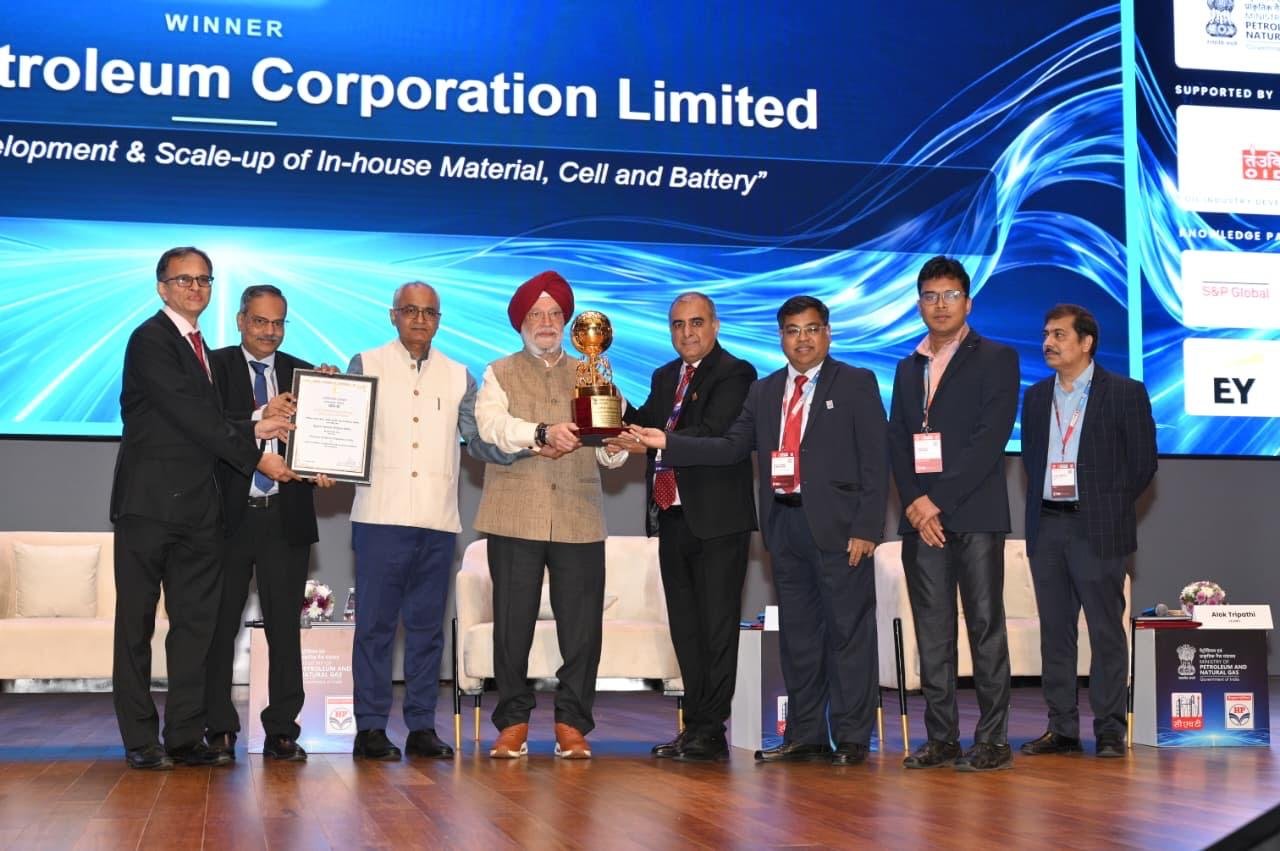
OMCs maintained fuel availability during the West Asian conflict, he told delegates at the 29th Energy Technology Meet (ETM 2026) which was inaugurated on 27 Oct.
The three-day event brings together policymakers, industry leaders, researchers, technology providers and energy experts to discuss innovations shaping India’s energy future.
Organised by the Centre for High Technology (CHT) under the aegis of the Ministry of Petroleum and Natural Gas, Government of India, and co-hosted by Hindustan Petroleum Corporation Limited (HPCL), the meet is themed “Accelerating Energy Innovation: From Research to Commercialisation.” The platform aims to strengthen collaboration across the energy value chain and accelerate the development and commercial adoption of emerging technologies.
This is the largest ETM edition so far, with over 2,500 delegates, more than 250 speakers, 44 technical sessions and over 220 exhibition stalls. It ended 29 Oct.
During a fireside chat at the event, Minister Puri discussed how India responded to disruptions in global energy supply while seeking to protect consumers from the full impact of the crisis. He highlighted the importance of acting across domestic production, alternative imports and last-mile delivery, noting that LPG production was increased significantly to support household requirements.
He also underlined the role of coordination across oil and gas public sector undertakings, refineries and distribution networks in maintaining continuity of essential fuel supplies.
The Minister’s conversation also focused on strengthening India’s long-term energy resilience through diversified supply sources, greater domestic production and a wider basket of fuels.
He highlighted the potential of compressed biogas (CBG) to turn agricultural residue and organic waste into energy while creating additional value for farmers and rural communities. Opportunities in sustainable aviation fuel and other next-generation biofuels were also discussed, alongside the need to strengthen domestic research, support start-ups and bring Indian technologies from development and pilot stages to commercial deployment.
Among others, Puri’s discussion also covered measures to increase domestic LPG production, diversify import sources and protect consumers from the impact of global supply disruptions.
The conversation also explored ways to strengthen long-term energy resilience through greater domestic production and a diversified energy mix, including the potential of compressed biogas (CBG), opportunities in sustainable aviation fuel and next-generation biofuels, and the need to strengthen India’s research and development ecosystem to accelerate the commercialisation of indigenous energy technologies.
A key announcement at the event was the development of a National Oil and Gas R&D Vision following detailed consultations. To support its implementation, the government is establishing the National Hydrocarbon Technology Hub (NHTH), an expanded institutional platform to coordinate research and development across the sector.
The NHTH will subsume the existing Centre for High Technology (CHT) and operate with a broader mandate, bringing together central public sector enterprises, private-sector R&D, start-ups, MSMEs, academia, Centres of Excellence and research institutions around shared national priorities. The initiative is intended to strengthen coordination, reduce duplication and accelerate the development and deployment of globally competitive indigenous technologies—creating a more connected energy research ecosystem under the vision of “One Vision, One Ecosystem.”
ETM 2026 features technical presentations, panel discussions, poster sessions and an exhibition. Focus areas include green hydrogen, sustainable aviation fuel, carbon capture, crude-to-chemicals, biofuels, gas-based energy, refining technologies and digitalisation. The programme brings together experts from India and abroad to share research, exchange industry perspectives and identify opportunities to translate technological advances into commercially viable solutions. Fiinews.com