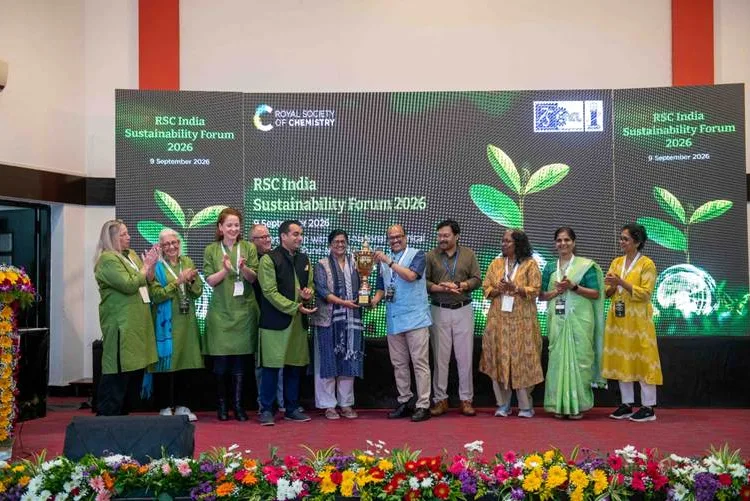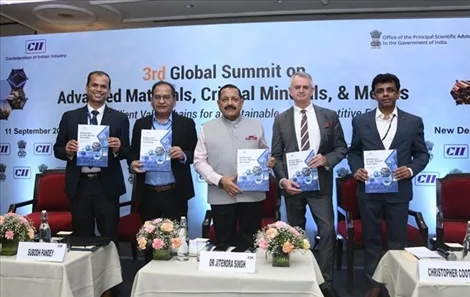
Waikar notes increasing use of reusable materials and circular procurement at European festivals
A red carpet unfurled at an airport. A convoy of dozens of vehicles. A ceremonial salute. Lavish banquets. Fireworks illuminating the night sky. For decades, such spectacles have symbolized prestige, power, and importance. Yet in 2026, as the world grapples with escalating climate risks, resource scarcity, mounting waste, and growing demands for fiscal accountability, it is time to ask a difficult but necessary question:
Do these rituals still reflect the values we want to represent? https://www.theclimategroup.org/
The question is particularly relevant because humanity is entering uncharted territory. According to the World Meteorological Organization, 2024 was likely the first calendar year in which global temperatures exceeded 1.5°C above the pre-industrial average, reaching approximately 1.55°C. The same report recorded unprecedented levels of ocean heat, sea-level rise, and greenhouse gas concentrations.
Meanwhile, the environmental cost of waste continues to grow. The UNEP Food Waste Index Report 2024 estimated that the world wasted approximately 1.05 billion tonnes of food in 2022, equivalent to 19% of food available to consumers. Households accounted for 631 million tonnes, while food services and retail sectors contributed another 421 million tonnes combined. Food loss and waste are responsible for roughly 8-10% of global greenhouse gas emissions, even as hundreds of millions of people experience hunger.
At the same time, global greenhouse gas emissions reached a record 57.1 gigatonnes CO₂-equivalent in 2023, and current policies still place the world on a trajectory of approximately 2.6°C to 3.1°C of warming this century. UNEP warns that emissions must fall sharply by 2030 and 2035 if the goals of the Paris Agreement are to remain achievable.
Against this backdrop, highly resource-intensive public ceremonies warrant closer examination.
A typical protocol-heavy VVIP event may involve special aircraft, large motorcades, extensive security deployments, ceremonial displays, state banquets, floral decorations, and fireworks. Illustrative estimates suggest that a single major event can generate between 30 and 190 tonnes of carbon emissions, produce hundreds of kilograms of food waste, consume thousands of kilowatt-hours of electricity, and cost taxpayers hundreds of thousands or even millions of dollars. When multiplied across hundreds or thousands of major events globally each year, the cumulative environmental and financial footprint becomes difficult to ignore.
Some will argue that such ceremonies are essential expressions of national pride, sovereignty, diplomacy, and tradition. They are not entirely wrong. Ceremonies matter. They reinforce identity, commemorate achievement, honor guests, and create social cohesion. However, history demonstrates that traditions are rarely static. Horse-drawn processions gave way to automobiles. Handwritten correspondence gave way to digital communication. Traditions endure precisely because they evolve.
The real question is not whether ceremonies should exist. The question is whether they should evolve.
Others may argue that ceremonial spending represents only a tiny fraction of government budgets and that far larger sources of emissions deserve greater attention. This argument also contains some truth. Ceremonies alone will not solve climate change. Yet public ceremonies occupy a unique position because of their visibility. Citizens are asked daily to conserve energy, reduce waste, recycle more, and adopt sustainable lifestyles. Public leaders, institutions, and celebrities send a powerful message when they demonstrate those same values in highly visible ways. Leadership is most persuasive when it leads by example.
A further concern is that reducing ceremonial scale could damage industries associated with events, hospitality, tourism, and protocol services. But sustainability is not anti-business. Rather than eliminating economic activity, green ceremonies redirect spending toward higher-value outcomes. Sustainable catering, circular event materials, renewable energy systems, digital technologies, electric mobility, community projects, environmental restoration, and local suppliers can all benefit from a more sustainable approach. Around the world, innovative festivals and conferences have already shown that environmental responsibility can coexist with economic vitality.
Perhaps the most emotionally compelling objection relates to culture. Many ceremonial practices have deep historical roots and symbolic meaning. Yet preserving values does not require preserving every practice unchanged. A 21-gun salute could become a 21-tree plantation initiative. Massive floral arrangements could be replaced with living plants donated to schools and communities. Fireworks could give way to drone displays powered by cleaner energy sources. Large motorcades could be replaced by smaller electric vehicle convoys. The dignity remains; the waste does not.
Indeed, some of the most promising examples are already emerging. Sustainable festivals in Europe increasingly use reusable materials and circular procurement. Conferences in Germany routinely provide digital proceedings and public transport incentives. Singapore’s sustainability initiatives emphasize resource efficiency and waste reduction. Indian communities are adopting eco-friendly festivals, plastic-free celebrations, and tree-planting campaigns. These examples demonstrate that sustainability and tradition are not adversaries. They can strengthen each other.
Importantly, green ceremonies should not be judged merely by appearances. They must be measured. Every significant publicly funded event should disclose its carbon footprint, energy consumption, food waste, water use, waste diversion rate, public expenditure, and community impact. Existing tools for greenhouse gas accounting, food waste tracking, ESG reporting, and sustainability assessment make such transparency entirely feasible.
What if prestige itself were redefined?
For generations, prestige was associated with larger crowds, longer motorcades, bigger banquets, and more elaborate displays. The future could instead celebrate lower emissions, less waste, stronger community engagement, greater transparency, and lasting societal impact. Governments and institutions could introduce Green Ceremony Awards, sustainability certifications, public rankings, and impact scorecards that reward stewardship rather than extravagance.
As environmental advocate Annie Leonard famously observed, “There is no such thing as throw away – when we throw anything away, it must go somewhere.” The same principle applies to ceremonial excess. The costs do not disappear simply because they are wrapped in tradition.
The most admired public ceremony of the future will not be remembered for the length of its red carpet, the size of its motorcade, or the grandeur of its banquet. It will be remembered for the trees planted, the emissions avoided, the resources conserved, and the communities empowered.
In a world already experiencing record temperatures, record emissions, and record environmental pressures, true leadership is no longer measured by spectacle. It is measured by stewardship.
The time has come to move from red carpets to green legacies.
From Red Carpets to Green Legacies: Why the Time Has Come to Rethink Public and Private Ceremonies is by Dr Deepak L. Waikar, Freelance Educator, Researcher, and Adviser – deepak.waikar@ieee.org. Author acknowledges use of AI tools for initial drafts and infographics. Fiinews.com