
India is at a pivotal stage in its sustainability journey, says RCS
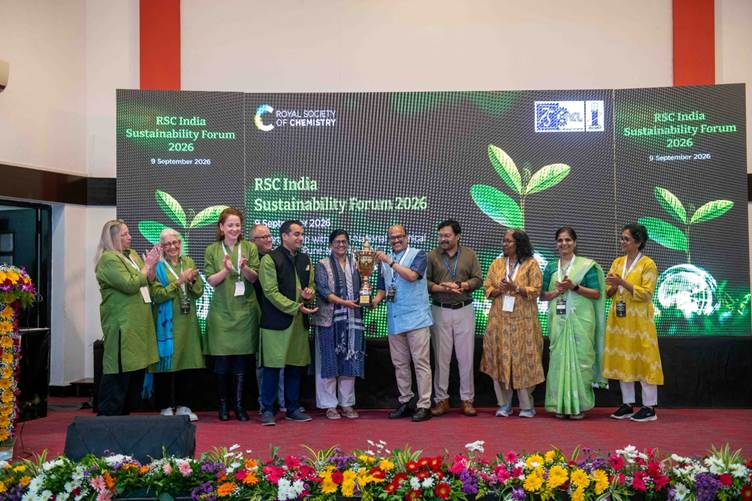
Leading scientists, industry experts, policymakers and innovators have explored how chemistry can accelerate India’s sustainability ambitions during the inaugural India Sustainability Forum (ISF) 2026 held in Pune.
Held under the theme “Advancing Sustainability through Chemistry”, the one-day forum served as a national platform for dialogue, collaboration and knowledge exchange on some of India’s most pressing sustainability challenges, including climate action, energy transition, circularity, sustainable manufacturing and environmental stewardship.
The forum was organized by the Royal Society of Chemistry (RSC) convened the inaugural India Sustainability Forum (ISF) 2026 in partnership with CSIR-National Chemical Laboratory (CSIR-NCL), Pune, and INFLIBNET Centre at the CSIR-National Chemical Laboratory, Pune.
India is at a pivotal stage in its sustainability journey. Achieving national goals in areas such as clean energy, resource efficiency and sustainable industrial growth will require science-led innovation and stronger partnerships across academia, industry, government and the wider research ecosystem, RCS said.
“Chemistry and the chemical sciences are expected to play a central role in enabling these solutions, from developing sustainable materials and advancing green chemistry to supporting cleaner manufacturing processes and resource-efficient technologies,” it added.
The India Sustainability Forum 2026 aims to strengthen connections between research and real-world impact by fostering collaboration, supporting innovation and encouraging engagement between scientific and industrial communities.
Dr Venkatesh Sarvasiddhi, Managing Director, RSC India and South Asia, said, “India has an extraordinary opportunity to lead the way in developing science-driven solutions for sustainability. Through the India Sustainability Forum, we aim to bring together diverse stakeholders to share knowledge, build partnerships and accelerate the translation of research into meaningful societal and environmental impact.”
The forum featured keynote addresses and expert panel discussions involving distinguished leaders from government, academia and industry. Speakers include representatives from the Office of the Principal Scientific Adviser to the Government of India, CSIR-NCL, INFLIBNET Centre, Shiv Nadar University, JNCASR, IIT Bombay, Sun Pharma Advanced Research Company, Pidilite Industries, Praj Industries, and several other leading institutions.
Key discussions focused on:
• Translating laboratory research into industrial sustainability solutions
• Advancing sustainable innovation through academia-industry collaboration
• Green chemistry and sustainable manufacturing
• Building partnerships to accelerate climate and sustainability goals
• Supporting India’s transition towards a circular and low-carbon economy
The programme included a virtual address on the Royal Society of Chemistry’s global sustainability strategy by Jo Reynolds, Director, Global Impact, Royal Society of Chemistry, alongside recognition programmes celebrating leadership and innovation in sustainable chemistry. These include She Leads Sustainability, the Chemistry for Sustainability: Emerging Researcher Award, and recognition of RSC Fellows from the Pune region.
As the first edition of what is envisioned as a flagship event for the Royal Society of Chemistry in India, the India Sustainability Forum aims to catalyse meaningful collaborations, strengthen the connection between science and society, and help accelerate the development of sustainable solutions for India’s future.
Dr Ashish Lele, Director of CSIR NCL Pune, said “As the host institution, we are absolutely delighted to partner with the Royal Society of Chemistry and IFLIBNET in bringing together an exciting community of researchers, industry leaders, policymakers, innovators and young scientists to exchange ideas in the panel discussions, and shape solutions for a more sustainable future.
“Sustainability is the defining challenge at the planet level, at national level, at societal level and at societal levels.” www.rsc.org fiinews.com