

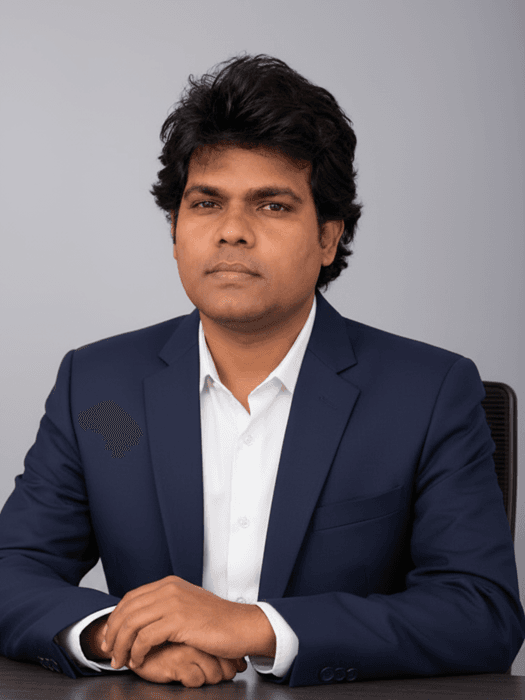
Indian enterprises are adopting AI faster than almost anyone, says Kowsika
Leapora AI Inc. (https://leapora.tech/), headquartered in Wilmington, Delaware, with operations in Hyderabad, has opened Taskeen™, its task accountability infrastructure, to organizations in India. Taskeen records who received, acknowledged, completed and signed off every piece of work, and exports that history as a document an auditor, regulator or customer can verify independently. It is available now at https://taskeen.leapora.tech/.
Every organisation has a task tool. Almost none can answer what an auditor asks: who received this directive, who acknowledged it, what evidence was filed before it was marked done, and who signed off.
So, the answer gets rebuilt from email threads, WhatsApp groups and memory.
AI has made the gap wider. Deloitte’s State of AI in the Enterprise 2026, India insights (March 2026), found 40% of Indian respondents report significant or full AI usage, against a global average of about 28%.
Whatever produced a piece of work, a person still answers for it. Taskeen records who that person is, what they approved, and when.
Indian regulators have already decided where that responsibility sits. MeitY’s India AI Governance Guidelines (November 2025) set out that the organisation which determines how an AI system is used bears primary responsibility for its outcomes.
SEBI Regulation 16C, in force since 2025, goes further: a SEBI-regulated entity that uses AI is solely responsible for the outputs of those tools. RBI, the DPDP Rules and the AI Governance and Economic Group point the same way.
None of these frameworks ask whether a task was marked done. They ask who was responsible, what they saw, and what they decided. That is the record most task tools do not keep.
This challenge is particularly pronounced in Global Capability Centres (GCCs). When a parent company’s auditor asks who approved this, and on what basis, the answer has to come from somewhere.
India hosts 2,117 GCCs employing 2.36 million professionals (Zinnov-NASSCOM, FY2026). Headquarters expect audit-ready records across data protection, labour, AI use and vendors at once. Run as separate tracks, that produces an audit trail that defends nothing.
Taskeen answers that question by construction. A director at headquarters and a team lead in Hyderabad are held to the same standard, and the exported record can be handed to either side’s auditor without Leapora AI in the loop.
Every step of a task is written as a linked entry carrying a cryptographic digest of its own contents and of the entry before it. A step altered or removed afterward fails verification instead of passing quietly.
Sign-off captures who signed, what the signature means, and when. Late work escalates to the next person accountable, and the escalation becomes part of the same permanent record.
Leapora AI calls this category task accountability infrastructure: software whose output is a record that survives being questioned, rather than a board that summarises opinions about progress. Grand View Research values the global task management software market at US$4.46 billion in 2026, growing to US$12.34 billion by 2033; Taskeen is positioned as the accountability layer for that market.
The cost is measurable. A July 2026 Workday India report found more than one-third of Indian employees spend over seven hours a week moving information between platforms, and 56% spend at least half their time coordinating across teams and systems.
Phiesi Networks, a marketing agency running more than 800 campaigns a year across 1,000 creators, replaced Google Sheets and Jira with Taskeen. It reports recovering six to seven hours per person each week and near-zero missed deadlines.
“Taskeen helps us streamline operations and keep teams aligned across fast-moving projects. It improves visibility, accountability, and execution speed by centralizing tasks and workflows in one place,” Swaroop Nerella, Director and Chief Operating Officer of Phiesi Networks, said on 14 Sept.
In Hyderabad, the Vivekananda Institute of Human Excellence, part of Ramakrishna Math, said after reviewing Taskeen that it appreciated “the value it can bring in minimizing efforts through automation and bringing all event and programme-related activities together in one place.”
“Conventional task tools keep a status history as a byproduct. In Taskeen, the record is the product,” said Siva Kowsika, CEO of Leapora AI Inc.
“Indian enterprises are adopting AI faster than almost anyone, and Indian regulators have been clear that the organisation deploying it answers for the result. When an auditor asks who signed off, most companies reconstruct the answer from email. We keep it as the work happens, and anyone can check it without trusting us,” he said.
Leapora AI, Inc. has filed three patent and three trademark applications with the U.S. Patent and Trademark Office relating to Taskeen.
Leapora AI, Inc. is headquartered in Wilmington, Delaware, with operations in Hyderabad, India. It builds task accountability infrastructure: an independently verifiable record of ownership, evidence, escalation and closure for every outcome an organisation answer for. Its first product is Taskeen. https://leapora.tech/ fiinews.com