
Electronic Interlocking upgrade at 32 stations
In a significant boost to railway infrastructure and capacity enhancement in Gujarat, Indian Railways has approved the doubling of the Adipur-Bhuj section (49 km) of Western Railway at a cost of Rs.493 crore under an ongoing programme for capacity augmentation through doubling, tripling and other network enhancement works.
The doubling of this strategically important section will strengthen rail connectivity in the Kutch region and support the anticipated growth in both passenger and freight traffic, the Ministry of Railways said on 17 June.
The Adipur-Bhuj section, presently a single-line route on the Gandhidham-Naliya corridor, is expected to witness substantial growth in traffic due to several railway infrastructure projects already under execution in the region. These include the Bhuj-Naliya Gauge Conversion, extension of the Naliya-Vayor line, and new railway lines connecting Naliya-Jakhau, Vayor-Lakhpat, and Deshalpar-Luna.
With these projects nearing completion, significant additional passenger and freight traffic is expected to be routed through the Bhuj-Adipur section. The doubling project has therefore been sanctioned to ensure adequate capacity, improve operational efficiency and cater to future traffic demand.
Improved Passenger and Freight Operations
The project is expected to facilitate the operation of two additional passenger train services in each direction every day, improving travel convenience and connectivity for passengers across the region.
The doubled line will also support movement of an additional 12 million tonnes per annum (MTPA) of freight traffic, strengthening logistics and industrial connectivity in western Gujarat.
The current line capacity utilisation of the section is projected to increase from the present level to 123% by 2029-30, highlighting the need for timely capacity augmentation. The doubling work will help decongest the route, reduce operational constraints and improve reliability of train operations. The project is also expected to generate additional revenue for Indian Railways through increased passenger and freight movement while supporting economic development in the Kutch region.
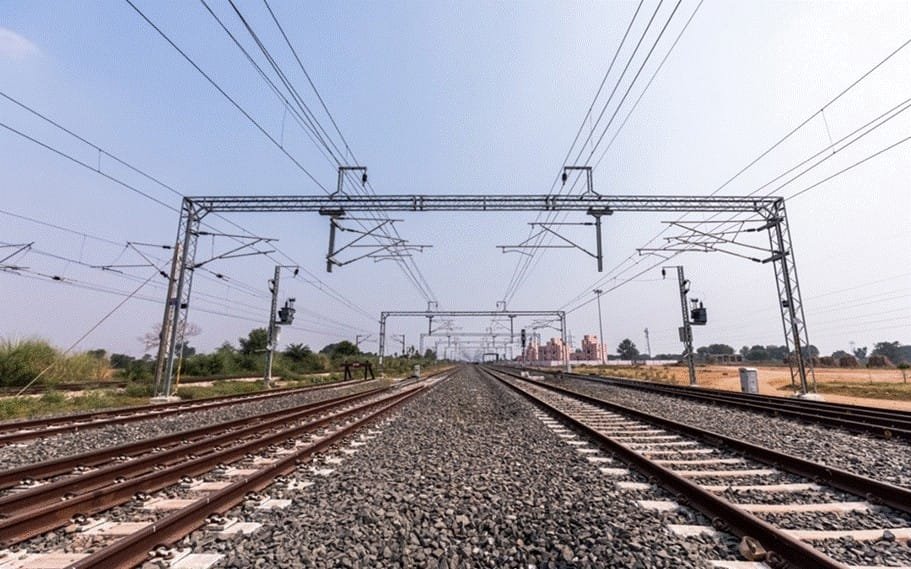
In another major step towards modernising signalling infrastructure and strengthening railway safety, the Railways has approved a Rs.405 crore signalling upgradation project on Eastern Railway involving the replacement of relay-based interlocking systems with Electronic Interlocking (EI) at 32 stations.
This includes 25 Panel Interlocking (PI)/Route Relay Interlocking (RRI) stations and 7 Intermediate Block Signalling (IBS) locations on High Density Network (HDN) and Highly Utilised Network (HUN) routes, the Ministry said on 17 June.
The project forms part of Indian Railways’ broader strategy to modernise signalling systems on critical routes and improve reliability, safety and operational performance across the network.
Modern Signalling for Safer and More Reliable Train Operations
Many of the existing signalling installations on these routes are based on older relay technology and face operational limitations due to ageing infrastructure. Issues such as non-segregation of clean and dirty wiring, outdated power supply arrangements, improper earthing systems and ageing signalling equipment have led to higher maintenance requirements and increased failure risks.
The approved project will replace these legacy systems with state-of-the-art Electronic Interlocking technology, which offers significantly higher reliability, enhanced safety and faster fault detection capabilities.
Electronic Interlocking to Reduce Failures and Improve Operational Efficiency
Electronic Interlocking systems use advanced digital technology to control train movements and signalling operations with greater precision and reliability. Compared to conventional relay-based systems, EI reduces the probability of signalling failures, improves system availability and facilitates quicker restoration in case of faults.
The modernised signalling infrastructure will support smoother train operations on some of the busiest railway corridors in the country while enhancing safety standards for both passenger and freight services.
Supporting Capacity Enhancement and Future Railway Technologies
The project is aligned with Indian Railways’ ongoing efforts to create a modern signalling ecosystem capable of supporting advanced technologies such as Kavach, Automatic Block Signalling and Centralised Traffic Control on high-density routes.
The Railways has also approved the construction of the Somtane-Chikhli Chord Line (3.7 km) on Central Railway at a cost of Rs.172 crore. The new chord line will bridge a critical missing rail link between Chikhli on the Karjat route and Somtane on the Roha route. It will provide seamless connectivity between the Karjat and Roha corridors without requiring trains to enter the congested Panvel Junction or undergo engine reversal.
Decongesting Panvel Junction
Panvel is one of the busiest railway junctions in the Mumbai region, handling traffic from four major directions including Roha, JNPT, Karjat and Diva. The absence of a direct chord connection between the Karjat and Roha routes currently results in operational constraints and congestion, as trains are required to pass through Panvel Junction. The approved chord line will provide a direct connection, helping streamline train operations and improve network efficiency.
Major Boost for Freight Movement Linked to JNPT
The project is particularly significant for freight traffic associated with Jawaharlal Nehru Port Authority/Trust (JNPA/JNPT), which handles nearly 60% of India’s container traffic.
At present, freight trains operating between the Karjat, Jasai and Roha corridors are required to enter Panvel Junction and undergo engine reversals before proceeding further. With the commissioning of the Somtane-Chikhli Chord Line, freight trains will be able to bypass Panvel, resulting in substantial operational benefits.
The project is expected to save approximately 110 minutes of detention time per freight train, significantly improving turnaround time and logistics efficiency.
Additional Traffic Capacity and Network Efficiency
The new chord line is expected to facilitate movement of an additional nine MTPA of traffic after completion. The project complements the already approved Panvel Elevated Chord Lines on the JNPT-Karjat and JNPT-Roha sections, completing a crucial missing link in the freight connectivity network serving western India.
The Ministry has also announced a Rs.139 crore to improve urban transportation infrastructure and enhancing rail-road connectivity in Madhya Pradesh by rebuilding of Road Over Bridge (ROB) No. 103-C, popularly known as Shastriya Bridge, in Indore.
The project has been sanctioned under Indian Railways’ ongoing programme for construction and modernization of road over bridges, road under bridges and related infrastructure aimed at improving mobility and safety at railway crossings.
Modern Four-Lane Bridge for Improved Traffic Movement
The approved project involves construction of a 4-lane Road Over Bridge featuring a 72-metre camel-back superstructure with PSC girders and a full viaduct arrangement. The new bridge is designed to accommodate increasing traffic demand while providing smoother and safer movement for commuters. To facilitate local traffic circulation and maintenance access, 6-metre-wide service roads will be provided on both sides beneath the bridge.
Comprehensive Infrastructure Upgradation
Apart from reconstruction of the bridge structure, the project includes extensive utility shifting and modernization works. Existing sewer infrastructure will be relocated and upgraded through construction of new sewer lines to ensure uninterrupted drainage services.
The project also includes shifting and renewal of electrical infrastructure, including installation of new poles, lighting systems and associated equipment, ensuring improved public utility services and urban infrastructure integration.
Boost to Connectivity and Urban Development
The rebuilding of Shastriya Bridge will significantly improve road connectivity in Indore, reduce traffic bottlenecks and enhance ease of movement for residents. The project is expected to strengthen integration between railway and urban transport infrastructure while supporting the city’s growing mobility requirements.
The approvals reflect Indian Railways’ continued commitment towards modern infrastructure development, improved passenger and public convenience, and creation of safer and more efficient transport networks across the country. Fiinews.com