
Gujarat credited for its contribution to India’s energy self-reliance
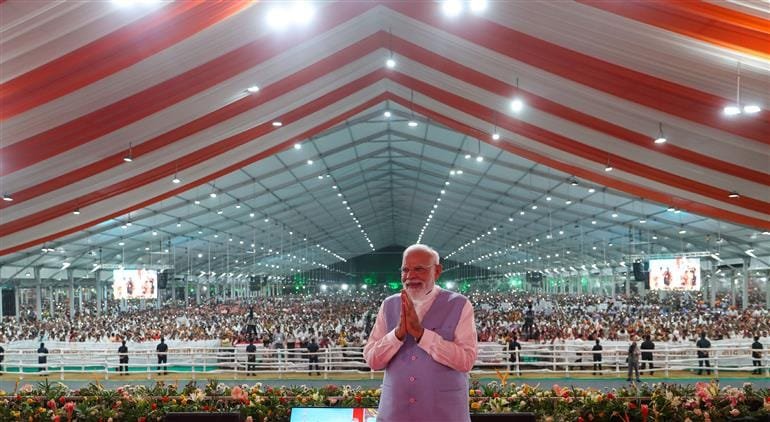
The Prime Minister, Narendra Modi, has dedicated to the nation and laid the foundation stone of multiple development projects worth over Rs.18,800 crore in Surat, Gujarat,highlighting the state’s progress with nature through its innovative ‘Circular Water Economy’, treating wastewater for industrial use, and the nationwide ‘waste to wealth’ movement of the past twelve years.
Ensuring future drinking water and drainage security, he highlighted the approval of the Tapi Barrage Project, while also anticipating Surat’s rapid expansion into electric mobility, the growing metro network, and the Hazira Industrial Area’s upcoming green steel production powered entirely by renewable energy. “All these steps, from ensuring our buses are electric to producing steel using green energy, will further empower Surat’s distinct identity as a truly green city,” noted PM Modi.
He specifically credited Gujarat for its contribution to India’s energy self-reliance, noting the state produces one-fifth (50 GW) of the nation’s 250 GW renewable energy capacity and is poised to lead in emerging sectors like Green Hydrogen and Green Ammonia.
Underscoring the critical importance of the energy capabilities built over the last twelve years, he outlined historic investments in solar power, ethanol blending, railway electrification, nuclear energy, modernized electricity transmission networks, and the massive expansion of gas pipelines and port storage capacities. “This ongoing global crisis shows how absolutely necessary self-reliance is in terms of energy, and the vast capacity the country has built over the last twelve years holds immense importance today,” observed the Prime Minister.
Reflecting on his visit to Hazira prior to the event, the PM Modi described the region not merely as an industrial zone, but as a comprehensive, thriving ecosystem encompassing energy, steel, defense production, and global maritime trade. He positioned this Maritime-Industrial Hub as a living testament to the ‘Aatmanirbhar Bharat’ (Self-Reliant India) initiative.
Outlining the government’s intense focus on modern connectivity to drive self-reliance, the Prime Minister cited mega-projects like the Dedicated Freight Corridor, the Bullet Train, and the newly inaugurated section of the Vadodara-Mumbai Expressway as vital catalysts for industrial and trade growth.
He emphasized that this infrastructure drive is inherently inclusive, reaching previously underserved tribal and remote regions through initiatives like the Dahod-Bodeli-Vapi corridor. By bringing four-lane highways to the tribal belts of Chhota Udepur, Narmada, Bharuch, and Tapi, the government is reducing travel time and freight costs while simultaneously unlocking unprecedented access to education, healthcare, and tourism at destinations like the Statue of Unity and Saputara. “By bringing modern connectivity to our tribal and rural areas, we are ensuring they receive excellent facilities for education, medicine, and enhanced earning opportunities,” affirmed PM Modi. Fiinews.com