
Advanced materials critical for energy storage systems, says Pathak
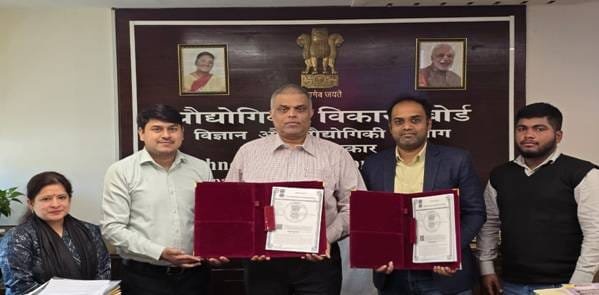
The Technology Development Board (TDB), Department of Science & Technology (DST), has entered into an agreement with NOPO Nanotechnologies India Pvt Ltd, Bengaluru, to support a project titled “I4F Feasibility Study: Feasibility Study of HiPCO SWCNT Integration in Sodium-Ion Batteries.”
The project is supported under the India–Israel Industrial R&D and Technological Innovation Fund (I4F) Call, aimed at enabling high-impact industrial research with commercial relevance.
The supported project focuses on evaluating the feasibility of integrating High-Pressure Carbon Monoxide (HiPCO)® Single-Walled Carbon Nanotubes (SWCNTs) into sodium-ion battery systems to enhance electrochemical performance. Sodium-ion batteries are increasingly viewed as a strategic alternative to lithium-based systems due to sodium’s abundance, lower environmental impact, and suitability for large-scale energy storage applications.
The feasibility study will involve the development and assessment of a proof-of-concept sodium-ion battery prototype incorporating NOPO’s proprietary HiPCO SWCNTs. The study will benchmark performance improvements against commercially available SWCNTs, focusing on key parameters such as energy density, electrical conductivity, cycle life, reversible capacity, rate capability, and corrosion resistance.
NOPO Nanotechnologies India Pvt Ltd is a nanomaterials company specialising in the industrial-scale production of high-purity single-walled carbon nanotubes using its patented HiPCO® process. The company has been actively engaged in SWCNT research and application development since 2011 and has established supply linkages across sectors including energy storage, electronics, semiconductors, healthcare, and advanced materials.
The project is expected to demonstrate the potential of SWCNT-enabled sodium-ion batteries offering faster charging capability, extended cycle life, improved safety characteristics, and enhanced sustainability. The outcomes of the feasibility study will help define performance benchmarks and pave the way for future scale-up and commercialization of sodium-ion battery technologies suited to India’s clean energy and grid storage requirements.
Speaking on the occasion on 17 Dec, Rajesh Kumar Pathak, Secretary, TDB, said, “Advanced materials play a critical role in next-generation energy storage systems. Through this project, TDB is supporting the evaluation of indigenous nanomaterial technologies that can strengthen India’s capabilities in sustainable battery technologies and reduce dependence on imported critical materials.” Fiinews.com