
CECA and AIFTA have been useful for companies working in India
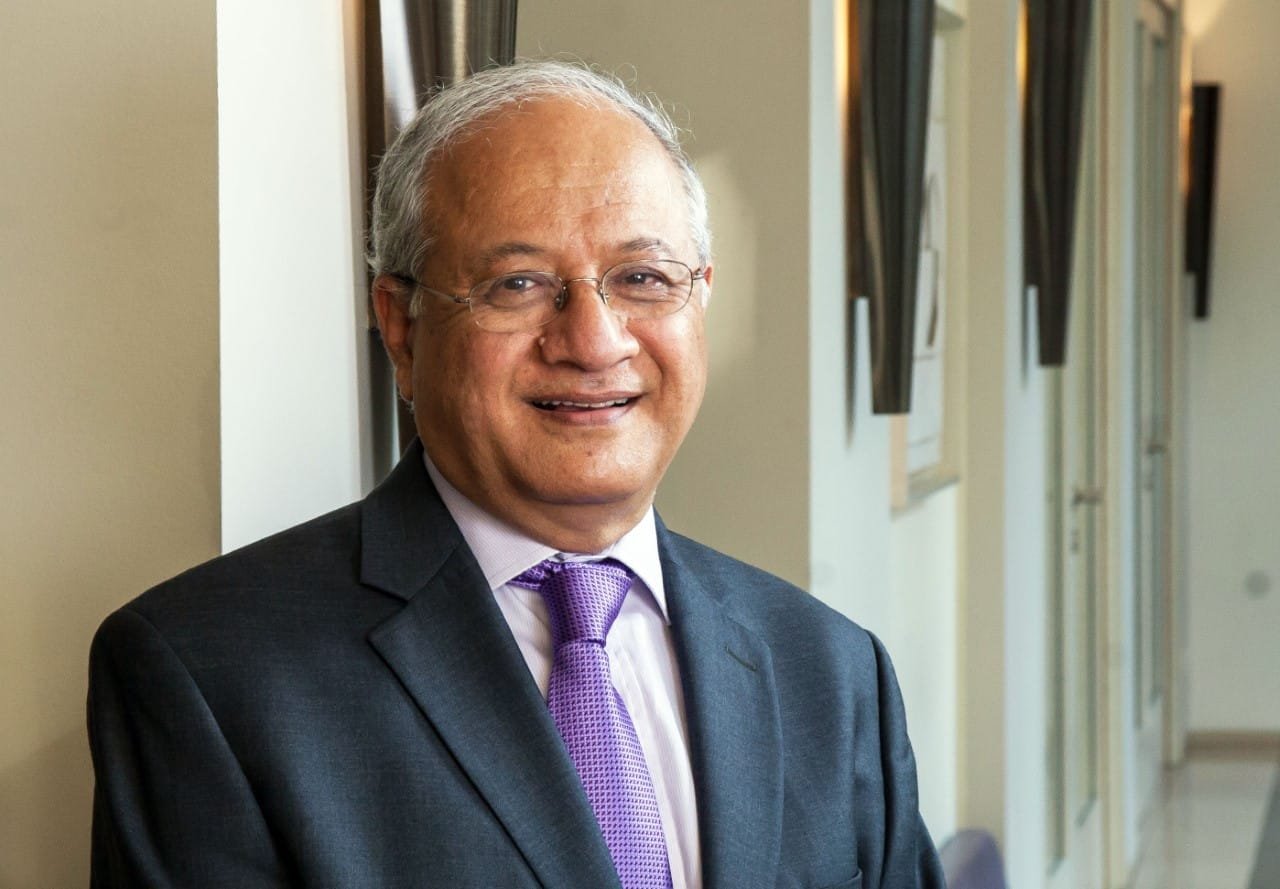
India is actively seeking to grow trade with 10 member countries of Association of South East Asian Nations (ASEAN) in the product categories that constitute significant portion of Indian trade, said Girija Pande, Chairman of the Singapore-based Apex Avalon Consultants in a recent investment seminar in Singapore.
He elaborates at the “Supply Chain Resilience: ASEAN stepping up to Indian Opportunities”, organised by the High Commission of India in Singapore in Association with the Indian Importers Chambers of Commerce and Industry as well as the Singapore-India Trade Connect held virtually 25-26 Mar 2021.
The India-Singapore Comprehensive Economic Cooperation Agreement (CECA) and the ASEAN-India Free Trade Agreement (AIFTA) have facilitated trade for companies working in the Indian and ASEAN markets of nearly two billion people.
Singapore has the unique opportunity to act as the regional hub for Indian businesses and support imports supply chain network that India is in the midst of building as it seeks to be a major manufacturing hub in the globe.
An estimated 9,000+ registered Indian companies are based in Singapore and with working along the city state’s stable legal and economic, trade and commerce management policies as well as using the republic as a springboard to the East Asian markets.
It is globally accepted that the high-growth Indian market also means living with a large and noisy democracy that India is. For new entrants to the Indian market, there are risk areas that need to be carefully navigated using trusted local partners. But these are challenges of market place where domestic demand often generates double-digit returns on investments with many research houses projecting double-digit CAGRs for almost all sectors as growth takes off in the Indian economy post COVID.
Digital India is just one of the many initiatives that the Government of India is trying to streamline. The Government has demonstrated a strong will in putting through reforms but implementation of these new formats, rules and regulations are challenges one should expect in reaching the consumer – i.e. imports. The international business community understands these challenges of putting reforms through the people in a democratic system.
Also, getting into the right region is important as the Indian market is divided into regions – North, South, East and West. As such, each state has its own industry and investment-friendly policies. Within that, the state administrations in southern & western India have worked out pro-business reforms better than other states, and offer good business opportunities.
Suppliers from Singapore and the ASEAN member countries will have to adopt long-term pro-Indian market strategies and take full advantage of the CECA and AIFTA.
As major electronic assemblers move to India in coming years, there will be demand on their supply chain vendors to set up shops along with their own facilities. This has happened in China and will be repeated in India. Manufacturer/Assemblers took along their vendor-supplier chain to China to ensure a steady and quality supplies of parts going into the final product.
For India, this requirement is especially so as the Indian Government is focused on having global manufacturers and assemblers with export potentials. The common call is for export-oriented manufacturing as in China with the domestic markets acting like balancers.
The global supply chains are splintering, especially due to COVID-19 which had paralysed 2020. Most of the companies have created “China plus one strategy” to hedge risks of supply chain disruption. Companies going to India should take note of such strategies.
India has implemented some very significant and unbelievable reforms recently to take advantage of the disruption to supply chains. In-depth studies are needed to work out strategies that hence on businesses are insulated against shocks such as the COVID-19 pandemic. The advantage of being in India is the wide range of technologies that have emerged following the pandemic. The good news is that Indian technologists have been fast in working around the pandemic.
Opportunities in India are plenty as the Government steps up to build the economy to at least US$5 trillion size in the coming years. It is now close to US$3 trillion but the next level of adding US$2 trillion means huge potential to be exploited at fast pace. The annual economic growth is bound to, and due to, bounce back to 7-8% GDP growth. The advantages of growing domestic demand and the low-cost manufactured-produced products for the export markets will boost economic growth.
India has now gone past the “Ease of Doing Business” phrase. The Government’s determination is demonstrated with a wide range of changes to the laws, covering labour and other business aspects, as well as foreign shareholding requirements.
Privatisation is in the process with the opening up of hitherto closed sectors.
The ASEAN and Singapore companies, especially manufacturers of electronic components, will stand well in India which lacks the skill to make value-added products. A model to follow in India is the Information and Technology sector which has spread across the world as global brands coming out of Bengalore and Hyderabad serving multi-national corporations. So, foreign expertise and skill plus Indian origin technologies, bundled together, will lead the world into “New Normal”.
The Government’s will power is to increase the share of manufacturing to 25% in the GDP from the current 17-18%. It is doable, for the Government has backed initiatives such as the novel production-linked incentive (PLI) scheme for smartphones and other value-added product manufacturing sectors.
Simultaneously, the Government is reforming rules and regulations to have final product to the Asian standards.
The newly announced PLI will provide manufacturers cash-backs and will help India export IT goods worth Rs.2.45 trillion a year.
The government’s intention is to bring the five largest companies of the world manufacturing laptops or tablets to India and will be offered PLI.
Apple plans to bring iPad tablet manufacturing to what is fast emerging as the world’s new tech manufacturing hub in India for electronic items — mobile phones, IT and electronic hardware.
Last year, India launched a US$6.7 billion plan to boost smartphone exports. Apple Inc, which has steadily raised production of iPhones in India to lessen its dependence on Chinese manufacturing. Apple took part in the PLI scheme via its contract manufacturers.
Reflecting confidence in the Indian market, Apple has ramped up manufacturing of iPhones in India via the local units of Foxconn Technology Group and Wistron Group . This is just three years for having started iPhone assembly in 2017.
A third contractor, Pegatron, has also set up a base in India last year. Foxconn has pledged to invest up to US$1 billion to expand a factory in southern India where the Taiwanese contract manufacturer assembles iPhones. The Apple suppliers have also committed roughly US$900 million over five years to make iPhones in India.
Global mobile phone companies such as Apple, through its contract manufacturers Foxconn, Pegatron Corp and Wistron, and Samsung along with Indian companies such as Dixon Technologies, UTL, Neolyncs, Lava International, Optiemus Electronics and Micromax are expanding their factories to take advantage of the PLI scheme.
Buoyed by the surge in interest from global manufacturers, the Government is also planning another PLI to boost domestic manufacturing of wearable devices such as smartwatches. This estimated PLI scheme would come with Rs.50 billion over five years.
With the consolidation of Apple’s manufacturing base and Tesla Inc’s entry to India, 2021 is shaping up to be the year that heralds the arrival of India as the other manufacturing hub for the world.
Ola’s new factory, the world’s largest two-wheeler facility on a 500-acre plot in Tamil Nadu, will churn out 10 million electric scooters and two-wheelers once it reaches full capacity by June-July 2022.
The Government has no intention to stop with incentives for attracting importers for re-export.
Taxes
Corporate taxes have been reduced to 17% for new manufacturing ventures from 22%. This has addressed concern of foreign companies and as the top-gear drive to make India a global manufacturing hub continues. The Government’s US$1 billion plan to boost local manufacturing and export of IT products such as Laptops, tablets and personal computers will further propel global tech giants such as Apple and Samsung to set up plants in the country, bringing along with them the component supply chains.
Further more, the authorities are working on a plan to overhaul customs duty structure by October this year to free it of all the distortions that make finished goods cheaper than the inputs that go into it. The Government is reviewing as many as 400 exemptions after eliminating 80 of them.
The idea is to levy low import duties on inputs that go into value-added products and impose higher duties on finished goods to encourage Indian and foreign companies to manufacture more products in India.
However, these are not easy measures. There is a need to exercise some caution. There is a need to ensure the policy on restructuring customs duties does not end up with India reverting to the failed import substitution policies favoured in the first four decades of Independence – from 1947 onwards till about the late-1980s.
India’s big challenge is to diversify its trade and cut over reliance on imports from China. The annual imports of US$600 billion is way beyond the US$320 billion exports. India’s major export markets are the United States, Greater China and the United Arab Emirates. But these are only for a number of products from the IT and pharma sectors as well as petroleum products.
The Indian diplomatic missions are working globally to help increase exports through extensive marketing campaigns in their host countries.
India is also working on heavy-duty export-oriented industries. It is opening up Aerospace & Defence manufacturing of high-end items. Biggest ever indigenous defence procurement programme in India creates ground for exports to neighbouring countries as well as African and Latin American markets.
Defence contracts are being signed with the state-owned industrial groups, including Hindustan Aeronautical Limited (HAL), Mahindra Defence System and L&T Defence System. HAL has a contract to make Tejas MK1A fighter jet for the Indian Air Force. As part of the deal, the government will procure 83 Tejas light combat aircraft from HAL – deemed as the biggest ever indigenous defence procurement programme in India.
International defence industries are looking for such deals through partnerships with the Indian defence sector. There is a huge scope of importing high-end components and assembling them in the final aircraft or vehicle.
Although 50% of the Tejas MK1A’s components, including most prominently its American built General Electric engine, Israeli Elta Radar and British Avionics are imported, nevertheless the basic design, the composite materials used for the aircraft, mathematical proficiency and metallurgy undergirding the design of the aircraft are the product of local effort. Once these types of manufacturing commence there will be a demand for its components from tier 2 & 3 suppliers.
The internet, startup, Fintech and e-Commerce are already in global competition.
In fact, India’s internet start-up leaders are now on the cusp of listing, preferentially on NASDAQ or other European bourses. These tech leaders will be listing with combined value at US$180 billion by 2025, according to a recent report by HSBC research.
“The growing scale and maturity of India’s internet economy is starting to create more value and investment opportunities. More than US$60 billion has been invested in India’s internet start-ups in the past five years, with around US$12 billion in 2020 alone,” said the report.
Toys are big business too. IKEA is keen to build eco-friendly toys in India for export with some potential suppliers. That strategy also sits in sync with IKEA India aiming to have around 12% of sales from kids’ range of products in the coming years.
India’s share in the US$100-billion global toy market is at an abysmally low 0.5%, and about 85% of the toys sold in the country are imported.
But with events such as the first toy fair and the creation of eight toy clusters with significant investments in that space by the government, it’s game on for India’s manufacturing sector.
(Pande is also an adviser to Foreign Investors on India. Apex Avalon Consultants facilitate investments into India https://www.apex-avalon.sg) #investment #manufacturing #economy #exports #technology #taxes /fiinews.com