
PM sees Jordan as hub for West Asian-African markets
King Abdullah II has called for creation of an economic corridor between South Asia and West Asia and beyond through collaborations between Jordan’s Free Trade Agreements and India’s economic power https://www.commerce.gov.in/.
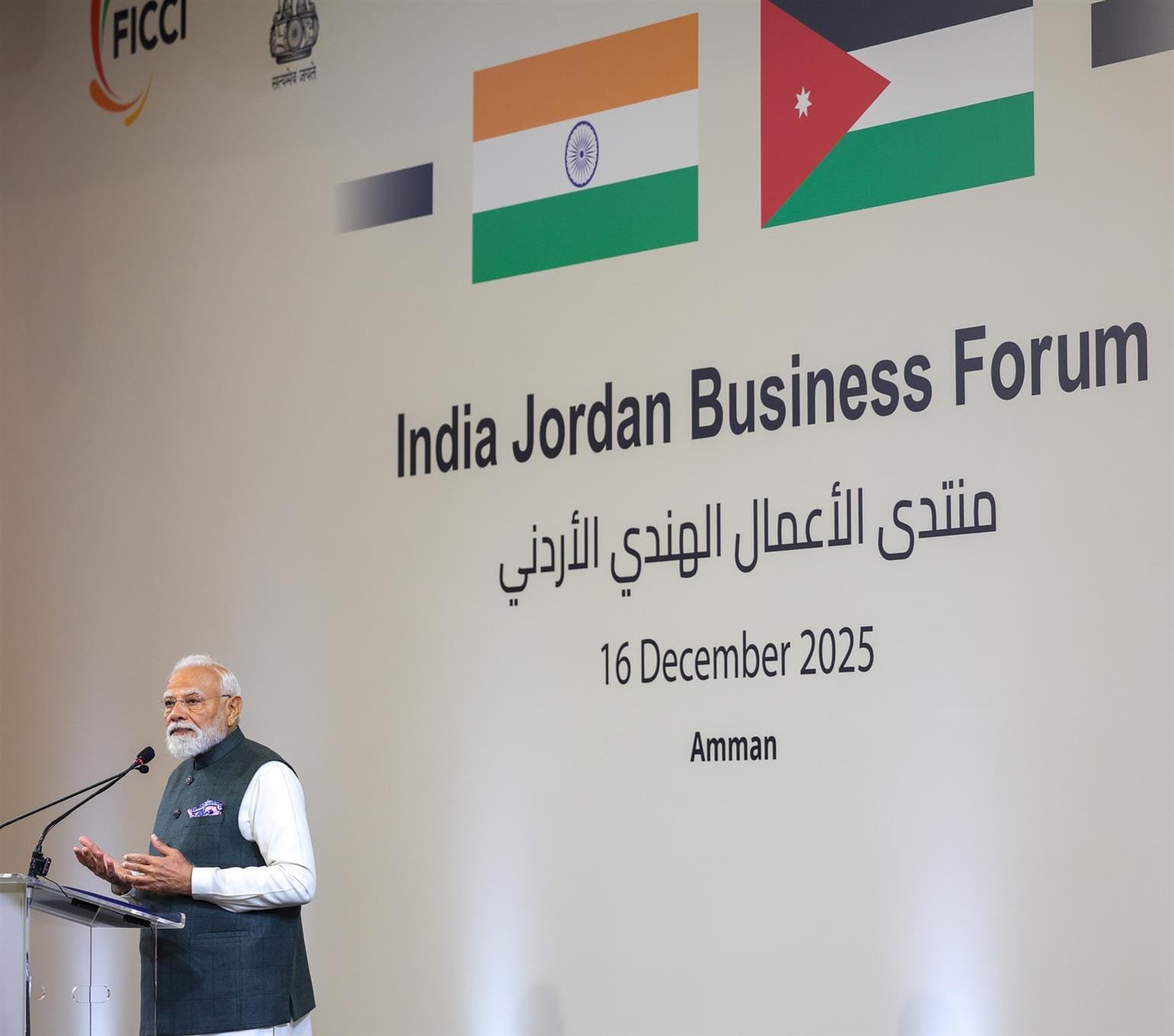
The King made the called at the India-Jordan Business Forum in Amman which was also addressed by Prime Minister Narendra Modi, who is on official visit to Jordan, and attended by Crown Prince Hussein and Jordan Minister of Trade and Industry and Minister of Investment https://www.bseindia.com/.
His Majesty and Prime Minister acknowledged the importance of increasing business-to-business ties between the two countries and called upon the industry captains from both sides to convert the potential and opportunities into growth and prosperity.
Addressing the Forum, Prime Minister Modi appreciated the leadership of His Majesty under whom Jordan has become a bridge that connects markets and regions, and is fostering business and growth https://www.nseindia.com/.
Prime Minister Modi also highlighted opportunities for India-Jordan business collaboration in the fields of Digital Public Infrastructure, IT, Fintech, Health-tech and Agri-tech and invited start-ups from both nations to join hands in these areas. He noted that India’s strength in pharma and medical devices sectors and Jordan’s geographical advantage could complement each other and make Jordan a reliable hub for West Asia and Africa in these fields.
He also highlighted business opportunities for the two sides in the areas of agriculture, cold chain, food parks, fertilizers, infrastructure, automobile, green mobility and heritage and cultural tourism. Speaking about India’s green initiatives, Prime Minister suggested greater India-Jordan business collaboration in the fields of renewable energy, green financing, desalination and water recycling.
PM Modi noted that Jordan and India share a vibrant contemporary partnership, built on the strong edifice of their close civilizational ties https://fieo.org/.
Prime Minister proposed doubling bilateral trade with Jordan to US$5 billion over the next 5 years.
Highlighting India’s success as the fastest growing major economy which is on course to become the third largest economy in the world, Prime Minister stated that India offered immense business opportunities for its partners in Jordan and across the globe.
PM Modi invited Jordanian companies to partner India and reap the benefits of its 1.4 billion consumer market, its strong manufacturing base, and its stable, transparent, and predictable policy environment.
The Prime Minister said that both countries can join hands to become trusted supply chain partners for the world. Alluding to the over 8% growth of the Indian economy, he underscored that this was a result of productivity-driven governance, and innovation-driven policies.
The Forum witnessed the participation of business leaders from both countries in the fields of infrastructure, health, pharma, fertilizer, agriculture, renewable energy, textile, logistics, automobile, energy, defense, and manufacturing. The delegation also comprised representatives of FICCI and Jordan Chamber of Commerce, who have an existing MoU to promote trade and economic cooperation between the two countries.
PM Modi visited Jordan 15-16 Dec. A joint statement following the visit underlined the strong bilateral trade engagement between India and Jordan, currently valued at US$2.3 billion for 2024, making India the third largest trading partner for Jordan.
The leaders agreed on the need to diversify the trade basket to further enhance bilateral trade. The Leaders also agreed on the early convening of the 11th Trade and Economic Joint Committee in the first half of 2026, to monitor progress in economic and trade relations.
The Leaders welcomed the convening of the Jordan- India Business Forum on the sidelines of the visit on 16 December 2025. A high-level business delegation from the two countries discussed ways to further strengthen and expand trade and economic cooperation between the two countries.
The Leaders acknowledged the importance of cooperation in the field of customs. They further agreed to fully utilize the Agreement on Cooperation and Mutual Administrative Assistance in Customs Matters. This agreement facilitates sharing of information to ensure proper application of Customs Laws and combating of customs offences. It also provides facilitation of trade by adopting simplified customs procedures for efficient clearance of goods traded between the two countries.
Both Leaders underlined the potential for enhanced economic cooperation between the two countries, taking into account Jordan’s strategic geographic location and advanced logistics capabilities. In this context, both sides reaffirmed the importance of strengthening transport and logistics connectivity, including the regional integration of Jordan’s transit and logistics infrastructure as a strategic opportunity to advance shared economic interests and private-sector collaboration.
Technology and Education
The two sides reviewed bilateral cooperation in the fields of digital technology and education and agreed to collaborate in various fields such as the capacity building of officials in digital transformation, promoting institutional cooperation for feasibility study in the implementation of Digital Transformational solutions and in other areas. They also agreed to explore further avenues of cooperation in the implementation of digital transformation initiatives of both the countries. The two sides expressed interest in expanding and upgrading the infrastructure and the capacity building programs of the India and Jordan Centre of Excellence in Information Technology, hosted at Al Hussein Technical University.
The two sides discussed the road map for collaboration in the field of Digital Public Infrastructure (DPI). In this context, both sides welcomed the signing of a letter of intent for entering into an agreement on sharing of Indian experience of DPI. Both sides agreed to collaborate in ensuring a safe, secure, trusted and inclusive digital environment.
The two sides recognized the vital role of technology in education, economic growth and social development and agreed on continued collaboration in the areas of digital transformation, governance and capacity building.
The Indian side highlighted the important role of capacity building in sustainable development and expressed commitment to continue collaboration in this field through the Indian Technical and Economic Cooperation (ITEC) Programme in various fields including information technology, agriculture, and healthcare. The Jordanian side appreciated the increase of ITEC slots from 35 to 50 with effect from the current year.
Health
The Leaders underscored their commitment to working together in the field of healthcare through sharing of expertise, especially in advancing tele-medicine and capacity building in training of health workforce. They acknowledged the importance of health and pharmaceuticals as a key pillar of bilateral cooperation, underlining its role in promoting the well-being of their peoples and in advancing the Sustainable Development Goals (SDGs).
Agriculture
The Leaders acknowledged the crucial role of the agricultural sector in advancing food security and nutrition and expressed a shared commitment to strengthening collaboration in this sector. In this context, they reviewed current cooperation between the two sides in the field of fertilizers, especially phosphates. They also agreed on increasing collaboration in exchange of technology and expertise to enhance the efficiency of agriculture and related sectors.
Water Cooperation
The Leaders welcomed the signing of the MoU on Cooperation in the field of Water Resources Management & Development and acknowledged the importance of cooperation between the two sides in areas such as water-saving agricultural technologies, capacity building, climate adaptation and planning and aquifer management.
Green and Sustainable Development
The Leaders discussed the importance of increasing collaboration in the field of climate change, environment, sustainable development and encouraging the use of new and renewable energy. In this context, they welcomed the signing of the MoU on Technical Cooperation in the field of New and Renewable Energy. Through the signing of this MoU, they agreed on the exchange and training of scientific and technical personnel, organization of workshops, seminars and working groups, transfer of equipment, know-how and technology on a non-commercial basis and development of joint research or technical projects on subjects of mutual interest. Fiinews.com