
Australia committed to deepening collaboration, says Minister
India and Australia are taking significant steps toward developing a globally mobile, industry-aligned talent pool, noted Minister of State for Skill Development & Entrepreneurship and Minister of State for Education Jayant Chaudhary https://www.msde.gov.in/.
But he has also stressed the need for a time-bound roadmap to achieve measurable outcomes in joint certification, global skills recognition, and trusted assessment systems https://www.bseindia.com/.
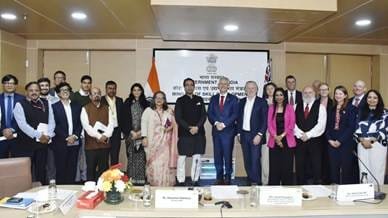
The Minister delivered these points at the 3rd Australia–India Education and Skills Council (AIESC) Meeting held in New Delhi on 9 Dec.
Australia’s Minister for Skills & Training Andrew Giles also reaffirmed Australia’s commitment to deepening collaboration and at the same time mentioned the need to navigate through the challenges to operationalise and deliver tangible outcomes https://www.nseindia.com/.
He also spoke about the progress made by both countries for institutional engagement between ITIs, NSTIs, and TAFEs.
Both sides expressed strong support for promoting joint training initiatives, trainer and assessor exchanges, and pilot programmes for placement of skilled candidates in priority job roles.
Participants also endorsed establishing an Annual India–Australia Skills Meet to review progress, share best practices, and sustain long-term cooperation http://commerce.gov.in.
The Australian delegation shared insights on future labour market trends, including rising demand for higher-skilled roles, quicker workforce transition mechanisms, and the growing relevance of clean energy, agri-food systems, and services-led growth.
They also underscored the economic impact of AI and the need for adaptive regulatory frameworks that enable innovation.
India outlined ongoing reforms in the VET ecosystem, including strengthened equivalence pathways, enhancements to the National Skills Qualifications Framework, and the development of Centres of Excellence in emerging sectors.
Deliberations focused on aligning skill ecosystems to keep pace with rapid technological shifts, including AI-led transformation, evolving industry needs, and sectoral talent shortages.
Participants noted that both countries face similar challenges in preparing their workforce for green sectors, clean energy, advanced manufacturing, agri-tech, and digital occupations. They emphasised the importance of industry-linked training models, flexible learning pathways, and strengthened trainer capacity. Fiinews.com