
World’s first thorium based nuclear plant “Bhavni” being set up in Tamil Nadu
India’s nuclear power capacity has increased to 41,112 million units at the end of 2021-22, boosted by 11 indigenous pressurised heavy water reactors, built at a cost of Rs.105,000 crore, from 2017.
The 11 plants added 7,000 MW capacity or 12,000 million units to 35,333 million units that were built between 1947 and 2013-14, Dr Jitendra Singh, the Minister of State Atomic Energy, told Rajya Sabha on 9 Feb 2023.
Further, the Space Department has also formed Joint Ventures with Public Sector Undertakings (PSUs) to augment India’s nuclear programme, said Dr Jitendra Singh, who is also Minister of State for Space.
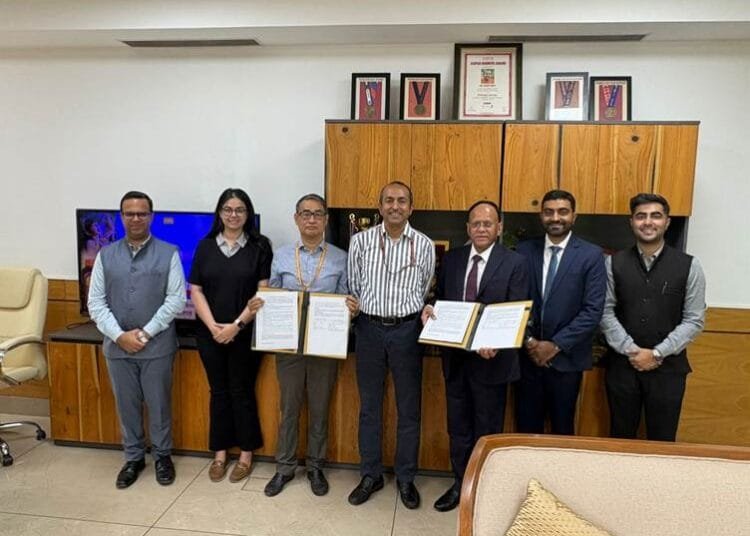
The Nuclear Power Corporation of India Limited (NPCIL) is presently in two joint ventures. One is with National Thermal Power Corporation Limited (NTPC) and the other with Indian Oil Corporation Limited (IOCL), he said, adding that such ventures are following the Government’s decision in 2015 to get private sector involved in space and atomic energy.
Moreover, Dr Jitendra Singh informed that while in the past India’s nuclear installations were mostly confined to South Indian States or in the west in Maharashtra and Gujarat, the Government is also promoting its expansion to other parts of the country.
One of the latest plants is located in Gorakhpur town of Haryana. It will be functional in near future, he said.
Dr Jitendra Singh also highlighted the world’s first thorium based nuclear plant “Bhavni”, using Uranium-233, is being set up at Kalpakkam in Tamil Nadu. It is going to be entirely indigenous and the first-of-its-kind, he said.
The experimental thorium plant “Kamini” already exists in Kalpakkam, he added. fiinews.com